





Choosing the best launch monitor for golf coaching isn’t the same thing as choosing the best launch monitor for a home simulator.
A home golfer might want distance numbers and virtual rounds. A golf coach needs something different: Trustworthy data, a fast setup, clear feedback for students, software that supports your teaching style, and - importantly - enough durability to survive daily use by people who definitely don’t all strike it like Scottie Scheffler.
It would be a mistake to think there’s one best launch monitor for every golf coach out there. We hate to break it to you, but there isn’t.
That’s because the best launch monitor for a PGA coach working from an outdoor range is not necessarily what’s best for an indoor coaching studio. Likewise, a club fitter has different priorities to a mobile coach running lessons across multiple venues, who in turn needs something different compared to a commercial simulator business running back-to-back bookings all day.
So instead of giving you a simple list of expensive orange boxes and shiny overhead systems, in this guide we try to break things down by coaching context.
We’ll look at the launch monitors that make sense for serious coaching, the workflows they support, and the devices we would be careful about recommending as purely professional tools.
Let’s get into it.
Quick Answer: Best Launch Monitors for Golf Coaches by Coaching Context
| Coaching context | Best launch monitor options |
|---|---|
| Elite coaching and outdoor range work | TrackMan 4, FlightScope X3 or X3C |
| Club fitting and high-end technical coaching | Foresight GCQuad, Foresight QuadMAX, TrackMan 4 |
| Fixed indoor coaching studio | TrackMan iO, Uneekor EYE XO2, Uneekor EYE XR, Foresight Falcon, Foresight GCHawk |
| Indoor simulator coaching bay | Uneekor EYE XO2, ProTee VX, Foresight Falcon, TrackMan iO |
| Independent PGA coach | Foresight GC3, FlightScope Mevo+ or Mevo Gen2 with Pro Package, Full Swing KIT |
| Mobile coaching and range lessons | FlightScope X3 or X3C, FlightScope Mevo+ or Mevo Gen2, Full Swing KIT, Foresight GC3 |
| Video-led coaching | Full Swing KIT, Uneekor EYE XO2 with Swing Optix, FlightScope with video tools |
| Budget-conscious coaching tool | FlightScope Mevo+ or Mevo Gen2 with Pro Package |
| Worth considering, but not yet a standard coaching choice | Garmin Approach R50 |
| Better suited to golfers and practice than professional coaching | Garmin R10, Rapsodo MLM2PRO, Square Golf, Shot Scope LM1 |
What Should a Golf Coach Look for in a Launch Monitor?
Before comparing models, let’s get clear on what actually matters.
For golf coaches, a launch monitor is not just a device for measuring distance. It can add huge value to what you’re doing by influencing how quickly you can diagnose the problem, how clearly you can explain it, and how convincingly you can show progress over time.
Because of those three elements, we think the buying criteria are a little different from your usual home simulator checklist.
Trustworthy Data
If a student makes a swing change and the numbers move, you need to know that movement is real. Inaccurate data is worse than no data at all, because it sends the lesson in the wrong direction and can reinforce unhelpful technical habits.
For coaching, the core numbers need to be repeatable and credible. Ball speed, launch angle, spin rate, carry distance and launch direction matter. But serious instruction often depends on club delivery data as well: club path, face angle, face to path, angle of attack, dynamic loft, low point and strike location.
Club Data
Ball data tells you what happened. Club data helps explain why.
A player who keeps missing right might need to understand path, face angle, strike, dynamic loft or angle of attack. Without club data, you can still coach, but you are working with a thinner picture.
For serious coaching and fitting, club data is not a luxury. It can be the difference between describing symptoms and diagnosing causes.
Strike Location
Impact location is one of the most useful pieces of feedback in a lesson. A toe strike, heel strike, high-face strike or low-face strike can explain ball speed, spin, curvature and launch far more quickly than a long lecture or demonstration.
For coaches and fitters, strike location is especially valuable because it connects the student’s feel with the actual contact point. Golfers are notoriously unreliable narrators of their own swing, so go for a launch monitor that gives you the truth.

Video Integration
Sure, data is powerful, but coaching is rarely just about numbers.
A good coaching workflow links what the club and ball are doing with what the player is doing - and that’s where video comes in. Face-on and down-the-line views can help connect movement patterns to the moment of impact, while slow-motion replay can make a technical change easier to understand.
This is why coaching software matters as much as the launch monitor itself.
Video and replay capabilities also give coaches the chance to improve the insights they can offer to students, and add extra value to sessions.
Reports and Student History
If you run structured coaching programmes, reports and student profiles are a big part of the equation.
A one-off lesson can survive with a few screenshots and a conversation, but long-term coaching needs better continuity. Ideally you want tools that can help you track progress, revisit baseline data in the future, compare sessions, and give students something useful to take away.
For coaches selling programmes rather than isolated lessons, reporting should be part of the product.
Which Launch Monitors Have the Best Coaching Reports?
If you coach players over several sessions, reporting gives you a record of where the player started, what changed, and whether the work you are doing is actually moving the right numbers.
But not every launch monitor handles this in the same way. Let's take a look.
TrackMan arguably has one of the strongest all-round coaching ecosystems. Its software brings together shot analysis, testing, video, performance data and player history, making it ideal for academies and coaches running structured development programmes.
Foresight is particularly strong for technical coaching and fitting reports. FSX Pro lets coaches review sessions, compare shots and share detailed ball and club data. That works well when the lesson is built around measurable changes to delivery, strike or equipment. A fitter comparing heads, shafts or setup changes can leave the player with something much more useful than a vague memory of which combination felt best.
Uneekor is a strong option for indoor coaches who want data and video in the same workflow. VIEW supports player profiles, Power U reports, impact replay and swing video, with higher software tiers allowing coaches to manage more student profiles. Pairing an EYE XO2 or EYE XR with Swing Optix? You can connect your player's movement, impact and resulting ball flight in one place.
The important point is that the best reporting system depends on what happens after the student leaves the bay. If you coach programmes rather than isolated lessons, choose a platform that makes progress easy to record, revisit and explain. That adds value to the student experience, and isn't just another folder of migraine-inducing numbers.
Left and Right-handed Use
This is a massive issue for indoor coaching.
A floor-standing camera-based launch monitor can be excellent, but if it needs repositioning every time a left-handed golfer steps in, that slows the session down and creates friction. In a one-to-one lesson, that might be manageable, but in group coaching, club fitting, corporate sessions or simulator bays, it’s a little issue that can become a big annoyance.
Overhead systems and radar units tend to handle mixed-handed use more smoothly, because the device doesn’t usually need to be moved between shots.
Setup Speed
No coach should waste the first 10 minutes of every session levelling hardware, calibrating alignment and apologising to a student while the software sulks.
If you coach outdoors, auto-levelling, alignment tools and reliable range setup matter. If you coach indoors, fixed installation can be worth the extra cost because it protects the flow of your sessions.
The best launch monitor is not always the one with the biggest spec sheet. It may be the one that lets you teach without the technology getting in the way.
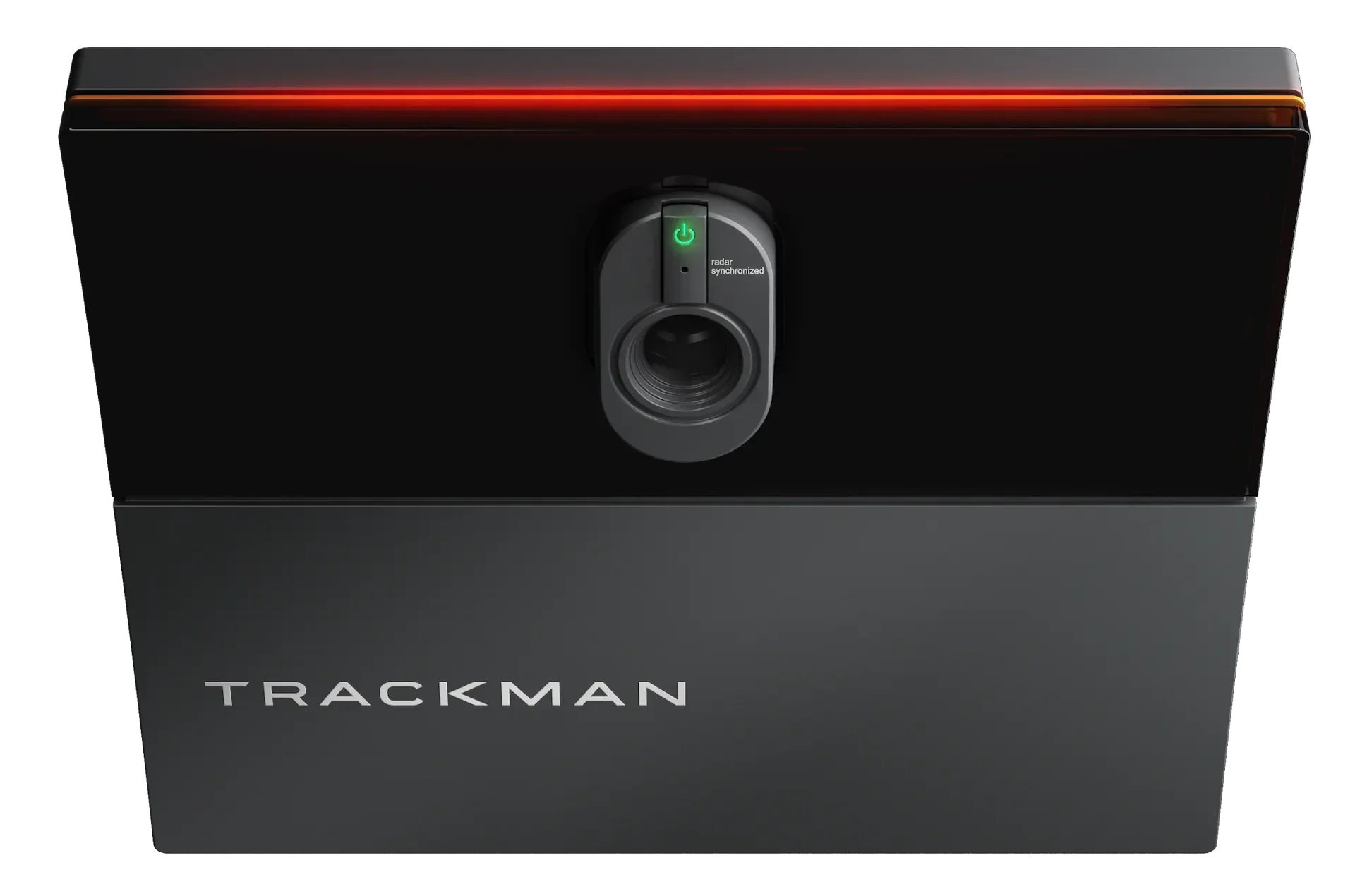
The Best Launch Monitor for Elite Golf Coaching: The TrackMan 4
TrackMan 4 remains the benchmark for elite golf coaching, especially outdoors.
It combines radar and camera technology, measures a comprehensive set of club, ball, and putting parameters, and is widely used across tour, academy, fitting, and high-performance environments.
For a coach working on an outdoor range, TrackMan 4’s strength is full-flight tracking. That matters because outdoor ball flight gives you the whole picture from impact to landing. If you are coaching trajectory, wind performance, distance control, curvature, wedge shots or driver optimisation, full-flight radar is a serious advantage.
Why TrackMan 4 Works for Coaches
TrackMan 4 is not just useful because it measures a lot of things. It works because the data ecosystem is mature.
When we say mature, we mean:
-
Clear ball and club delivery data
-
Putting and short-game functionality
-
Outdoor and indoor use
-
Strong testing modes
-
A recognised brand that students trust
-
A software environment built around performance improvement
-
A good fit for academies, performance centres and fitting studios
TrackMan also has strong perceived authority. Realistically, this matters commercially. If you are running a premium academy or performance coaching business, students often already understand what TrackMan is. That reputation can support your bookings and lesson experience before the first ball is hit.
Reasons to Think Twice
Let’s start with the obvious one: TrackMan 4 is expensive, and it is not always the cleanest answer for a compact indoor coaching bay. Indoor radar setups need enough ball flight and enough depth behind the ball. In a purpose-built studio, that may be fine. In a tighter space, an overhead or camera-based unit may be easier to live with.
The GolfBays Verdict
TrackMan 4 is the best choice for elite outdoor coaching, performance academies and coaches who want one of the strongest all-round data ecosystems in golf. It may be overkill for many independent coaches, but there’s a reason it’s become the standard-bearer for professional coaching.

The Best Launch Monitor for Club Fitting: Foresight GCQuad
For club fitting and technical coaching, the Foresight GCQuad is at the top of our suggestions list.
The big strength here is camera-based impact measurement. Foresight’s high-end portable units sit close to the ball and capture impact conditions in detail. For club fitting, that is exactly where the useful information lives.
TrackMan is still very strong for fitting, particularly outdoors, but Foresight has become a serious standard for indoor fitting and strike-based analysis.
Why it works for coaches and fitters
The GCQuad makes sense when a coach or fitter needs detailed feedback on impact and club delivery.
They are particularly useful for:
-
Strike location
-
Club path
-
Face angle
-
Angle of attack
-
Loft and lie information
-
Ball launch and spin
-
Fitting sessions
-
Indoor lessons
-
Outdoor lessons where portability matters
For fitting, the ability to connect club delivery, ball flight and impact location is vital. For example, a player might think they need a different shaft, but the data could show they are striking it low on the face with too much dynamic loft.
Reasons to Think Twice
Portable Foresight units are side-mounted, so left and right-handed switching will be a reality. If you regularly coach groups or run a simulator bay with both right and left-handed players, an overhead unit would be a smoother choice.
The GCQuad is also a serious investment. This makes sense when the launch monitor is central to your revenue: for example fittings, premium coaching, structured programmes or high-end simulator services. To unlock the GCQuad’s full club-delivery and impact-location capabilities, you need the relevant Club Feature licence and clubface markers - so factor in this additional cost when making your final decision.
The GolfBays Verdict
The GCQuad is among the best launch monitors for club fitting and serious technical coaching. If your lessons depend on strike, face, path and delivery data, this is an ideal professional tool.
Best Radar Alternative for Outdoor Coaches: FlightScope X3
The FlightScope X3 is a strong option for coaches who want advanced radar-based tracking without going down the TrackMan route.
Why it works for coaches
FlightScope X3 is particularly strong for:
-
Outdoor range coaching
-
Mobile coaching
-
Full-flight ball tracking
-
D-plane analysis
-
Wedge and trajectory work
-
Club and ball data
-
Video with data overlay
-
Coaches who want a high-end radar system with strong portability
FlightScope also has useful optimiser tools, which can help coaches and fitters show how launch, spin, descent angle and environmental conditions affect performance.
Reasons to Think Twice
Like any radar system, FlightScope needs enough space to work well, especially indoors. If you are building a compact indoor coaching studio, an overhead or camera-based system may be more straightforward.
The software ecosystem is strong, but TrackMan still has the wider brand recognition among many students and premium coaching environments. That may matter less to a technically confident coach and more to a venue trying to sell premium lesson packages.
The GolfBays Verdict
FlightScope X3 is an excellent choice for outdoor coaches, mobile performance coaches and data-led instructors who want serious radar tracking. For the right coach, they are not a compromise option. They are a proper professional route.

The Best Launch Monitors for a Fixed Indoor Coaching Studio: TrackMan iO, Uneekor EYE XO2 or Foresight Falcon
Indoor coaching has different rules.
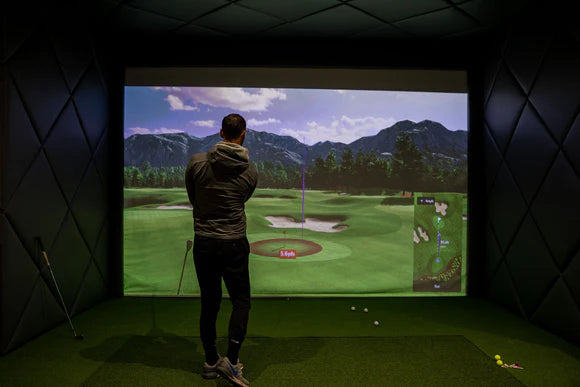
Once you move inside, the launch monitor needs to support speed, flow and repeatability. That’s because a fixed indoor studio is not just about getting accurate data. It’s about building a coaching environment that works every day.
Long story short, this is where ceiling-mounted launch monitors become appealing.
Why overhead launch monitors work indoors
Overhead systems keep the hitting area clear, reduce trip hazards and make switching between players easier. They are especially useful when you coach both right and left-handed golfers - which is an inevitable challenge.
If you’re a coach working in a fixed studio, the last thing you want is to move hardware around the mat every time the next player steps in. You want the student to hit, the data to appear, the video to replay and the lesson to keep moving.
TrackMan iO
TrackMan iO is designed specifically for indoor use. It gives coaches access to the TrackMan ecosystem in a ceiling-mounted format, using radar and camera technology from an overhead position.
For indoor coaches who want the TrackMan brand, software and data environment without placing a unit behind the golfer, the iO is a serious option.
It’s best suited to:
-
Premium indoor coaching studios
-
Commercial simulator bays
-
Coaches who want TrackMan indoors
-
Facilities where left and right-handed switching matters
-
Data-led lessons in a fixed environment
The caveat is the cost. TrackMan iO is still a premium system. You’ll need to check which package includes the club data and features you actually need, as different software tiers are available. TrackMan iO’s Home package includes only club speed, while Home Complete and Commercial include broader club data.

Uneekor EYE XO2
The Uneekor EYE XO2 is one of the strongest indoor coaching options for coaches who want data, video and a clean fixed setup.
It’s a front-mounted overhead launch monitor with three high-speed cameras, a large hitting zone, ball and club data, real-time swing visuals and impact replay. It can also be paired with Swing Optix cameras, giving coaches face-on and down-the-line video alongside the numbers.
That combination is genuinely useful for coaching. A student can see the swing, the impact, the strike feedback and the resulting ball flight in one environment.
Uneekor’s reporting and profile structure also matters for coaching businesses. If you are working with students over the long term, student profiles and reports can support better follow-up and add an extra dimension to your offering.
The EYE XO2 is best suited to:
-
Indoor coaching studios
-
Coaches who use video heavily
-
Simulator-based lessons
-
Left and right-handed player use
-
Structured student programmes
-
Premium home studios used for coaching
The main caveat is that full club tracking requires reflective club stickers. That is not a deal-breaker, but in a coaching environment you need to build it into your session process.
The Foresight Falcon and GCHawk
The Foresight Falcon and GCHawk are premium overhead systems for coaches and commercial environments that want Foresight’s camera-based data in a fixed bay.
They make sense when the studio needs:
-
A clear hitting area
-
Left and right-handed play
-
Commercial durability
-
Strong indoor data
-
A premium simulator and coaching environment
-
Reduced need to reposition hardware
Falcon is the newer, more compact overhead option, while GCHawk remains a high-end ceiling-mounted system with a large hitting zone. These are not casual purchases by any stretch, but they make sense in a studio where the launch monitor is earning its keep every day.

The GolfBays Verdict
For fixed indoor coaching, the best options are usually overhead. TrackMan iO is the premium choice for coaches who want the TrackMan ecosystem indoors. Uneekor’s EYE XO2 is one of the strongest options because it combines overhead tracking with video and reporting. The Foresight Falcon and GCHawk are serious commercial-grade choices for premium studios and fitting environments.

The Best Value Indoor Options: The ProTee VX
The ProTee VX deserves to be in the conversation for indoor coaching bays, especially where the setup is partly lesson space and partly simulator space.
It’s another overhead launch monitor, which means it keeps the floor clear and works well for left and right-handed players.
Why We Like It
ProTee VX is strongest when you care about:
-
A fixed indoor simulator bay
-
Left and right-handed use
-
Fast session flow
-
A clean hitting area
-
Simulator play alongside coaching
-
No need for marked balls or club stickers
-
Lower ongoing software friction compared with some premium ecosystems
Reasons to Think Twice
The ProTee VX isn’t the obvious first choice for a coach whose business depends on advanced reporting, club fitting workflows or a deeply established coaching software ecosystem. But it is a strong indoor simulator and coaching bay option - just don’t expect a high-performance coaching analysis platform to rival some of the names above.
The GolfBays Verdict
The ProTee VX is a strong choice for indoor coaches on a budget who want an overhead system, clean left/right-handed use and a simulator-friendly setup.

The Best Mobile Coaching Option: Full Swing KIT
Full Swing KIT is a credible option for coaches who want to integrate video into their sessions.
Its built-in camera and app workflow make it especially useful for mobile coaching, range lessons and coaches who want to connect swing footage with launch data. The Onform integration also makes it more relevant for coaching than a simple data-only device, because it brings launch monitor numbers into a video coaching workflow.
Why it works for coaches
Full Swing KIT is a good fit for:
-
Video-led coaches
-
Mobile coaching
-
Range lessons
-
Remote follow-up
-
Swing analysis linked to launch data
-
Coaches who want a portable unit with built-in video
For many coaches, the most powerful lesson moment is showing the movement pattern that produced whatever data point you’re looking at. Full Swing KIT leans naturally into that.
Reasons to Think Twice
Full Swing KIT is not the strongest choice for club fitting, strike location or high-end indoor studio work. It doesn’t sit in the same category as TrackMan 4, GCQuad or FlightScope X3 for deep professional analysis.
But for a coach who teaches through video and wants a portable, simple workflow, it offers plenty.
The GolfBays Verdict
Full Swing KIT is great for video-led coaches who want launch monitor data to support movement analysis. It wouldn’t be our first pick for high-end fitting, but it’s much more relevant to coaching than many consumer launch monitors.
FAQs: Launch Monitors for Golf Coaches
What launch monitor do most golf coaches use?
At the serious end of golf coaching, the most established names are TrackMan, Foresight Sports and FlightScope. You’ll see them in performance centres, fitting studios, academies and outdoor coaching environments because they offer strong data, trusted software and professional credibility.
But that does not mean every coach needs the same setup. A coach working from an outdoor range has very different needs from someone running lessons in a fixed indoor studio. Indoors, overhead systems such as Uneekor and ProTee can make more sense because they keep the hitting area clear, support left and right-handed players more smoothly, and help sessions flow without moving hardware around the mat.
The real question is not what most coaches use. It is what fits the way you actually teach.
Is TrackMan the best launch monitor for golf coaches?
TrackMan is one of the benchmark systems in elite golf coaching, especially for outdoor range work where full ball flight tracking is a major advantage. It has the tour presence, the brand recognition and the depth of data that many serious coaches want.
But best is doing a lot of work there. TrackMan is not automatically the best choice for every coaching business. If you are building a compact indoor coaching studio, an overhead system may give you a cleaner setup, easier left and right-handed use, and less day-to-day faff. If you are an independent coach working to a tighter budget, you may be better served by a strong value setup that gives you the core data you need without turning your business plan into a horror story.
TrackMan is excellent. It is not always the most sensible answer.
Is GCQuad good for golf coaching?
Yes. Foresight GCQuad is one of the strongest portable launch monitors for coaching, fitting and detailed impact analysis. It is particularly useful when you care about strike location, face delivery, club path, launch, spin and fitting decisions.
The main thing to understand is that GCQuad is a premium tool for premium workflows. It makes most sense if the launch monitor is central to how you earn money: club fitting, technical lessons, structured coaching programmes or high-end studio sessions.
The trade-off is left and right-handed use. Because GCQuad is a side-mounted unit, you may need to move it when switching between right and left-handed golfers. That is manageable in one-to-one coaching, but it can become irritating in group sessions, fittings or simulator environments where speed matters.
Is FlightScope Mevo+ good enough for golf coaching?
Yes, in the right setting. FlightScope Mevo+ becomes much more relevant for coaching when paired with the Pro Package, because that gives coaches access to more useful club delivery data, including metrics such as club path, face to path, face to target, dynamic loft and low point.
It is not the same kind of tool as a top-end radar system or a premium fitting-focused camera unit. But for independent PGA coaches, mobile coaches and coaches who want strong value without jumping straight into the most expensive tier, it can be a very sensible option.
The caveat is that Mevo+ is still a radar unit, so setup space matters. It is best suited to coaches who have enough room behind the ball and enough flight distance to get reliable results. If you are working in a tight indoor studio, a fixed overhead system may be easier to live with.
Should golf coaches use radar or camera-based launch monitors?
It depends where and how you coach.
Radar systems are particularly strong outdoors because they can track more of the ball flight. That makes them useful for driver work, trajectory control, wedge gapping, shot shape, distance control and coaching in real-world conditions.
Camera-based launch monitors are often stronger indoors because they capture what happens around impact without needing as much ball flight. That can be ideal for indoor studios, fitting bays and simulator-based coaching.
Overhead camera systems add another practical advantage: they stay out of the way. That matters more than people think. If you coach left and right-handed golfers, run group sessions or want a clean simulator bay, not having to move a launch monitor between shots is a big win.
What is the best launch monitor for indoor golf coaching?
For fixed indoor coaching, overhead launch monitors are usually the cleanest option. Systems such as Uneekor EYE XO2 and ProTee VX work well because they keep the hitting area clear, support smoother left and right-handed use, and create a more professional coaching environment.
That does not mean every indoor coach needs the same system. If your lessons are heavily data-led, prioritise club data, impact feedback, video integration and student reporting. If your bay is used for simulator hire as well as coaching, prioritise reliability, ease of use and quick session turnover. If your coaching is more movement-led, video integration may matter as much as the launch numbers.
A good indoor coaching setup should not slow the lesson down. If the tech keeps interrupting the flow, it is not helping.
Is Garmin R10 good enough for a golf coach?
Garmin R10 is not what we would recommend as a primary professional coaching tool. It can be useful for golfers, practice sessions and basic feedback, but most coaches need stronger data, better reporting, more robust workflows and more confidence in the numbers.
That does not make the R10 a bad product. It just means it sits in a different category. For personal practice, casual simulator use or a golfer wanting entry-level feedback, it has a place. For a coach charging for lessons and making technical decisions from the data, we would look higher up the range.
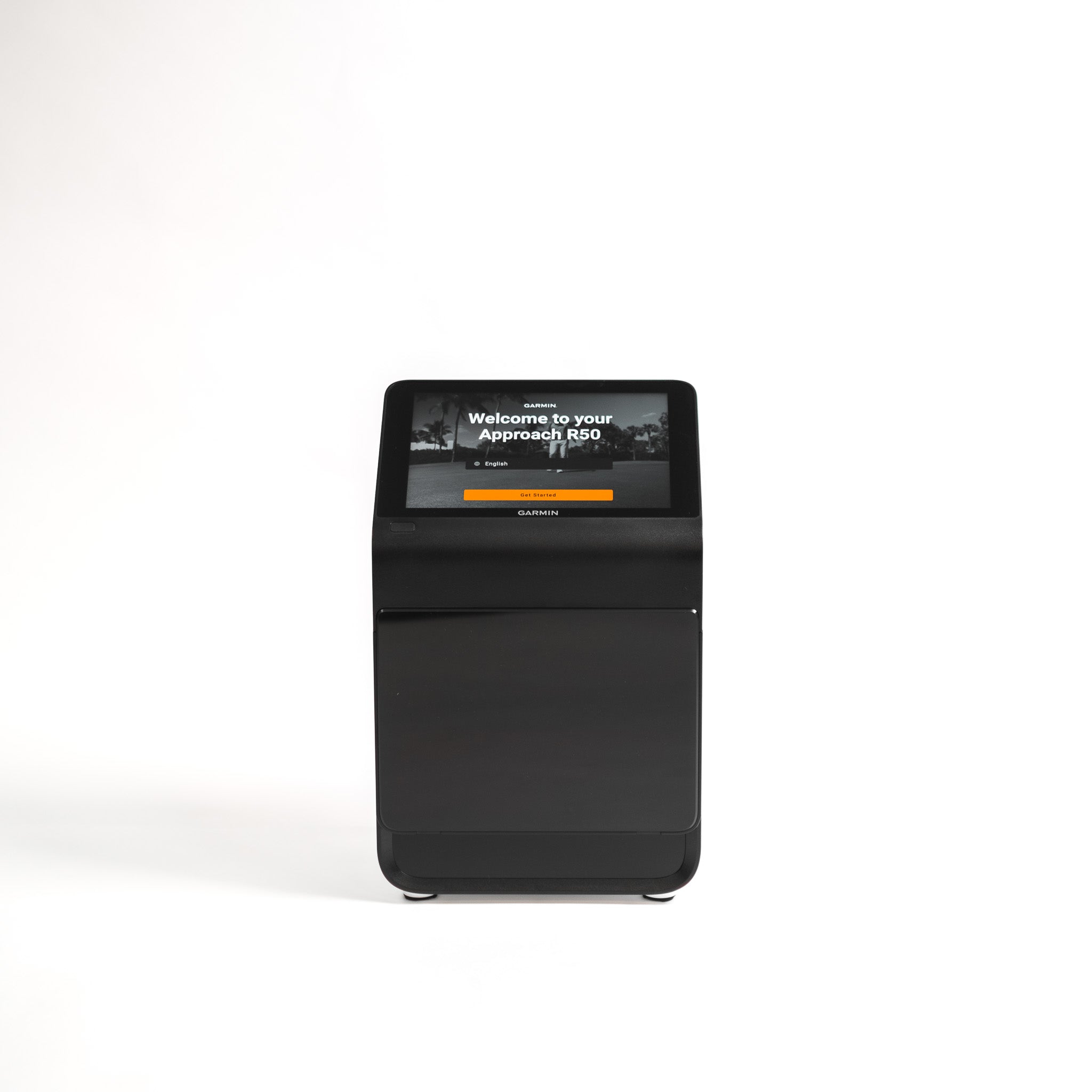
Is Garmin R50 good for golf coaches?
Garmin R50 is a much more serious option than Garmin R10. The built-in screen, impact video and wider set of ball and club metrics make it more relevant for coaches, especially those who want a portable setup that does not rely as heavily on extra devices.
But we would still treat it as an emerging serious-user option rather than a proven coaching standard. It has plenty to like, especially for portable practice and premium home simulator use, but it is not yet as established in professional coaching workflows as the bigger coaching and fitting ecosystems.
For a coach, the question is whether the convenience of the R50 outweighs the depth, reporting and workflow maturity of more established coaching systems.
What is the most important launch monitor data for golf coaches?
The most useful data depends on what you are coaching.
For general lessons, ball speed, launch angle, spin rate, carry distance and launch direction give you the basic picture. For technical coaching, club path, face angle, face to path, angle of attack, dynamic loft and low point become much more important. For fitting and strike work, impact location can be one of the most valuable pieces of information on the screen.
But coaches should not drown students in numbers. Nobody improves because they have been shown sixteen metrics and mildly traumatised by a spreadsheet. The skill is knowing which two or three numbers actually matter for that golfer, in that lesson, on that day.
Do golf coaches need launch monitor reports?
If you sell structured coaching programmes, reports are extremely useful. They help you track progress, revisit baseline numbers, show improvement over time and give students something valuable to take away after the session.
For a one-off lesson, a full report may not always be necessary. A clear explanation and a few key numbers might be enough. But for long-term coaching, club fitting, performance programmes and repeat lesson packages, reporting can become part of the product.
Good reports also help justify the value of coaching. They turn a lesson from something the student vaguely remembers into something they can review, understand and act on.